

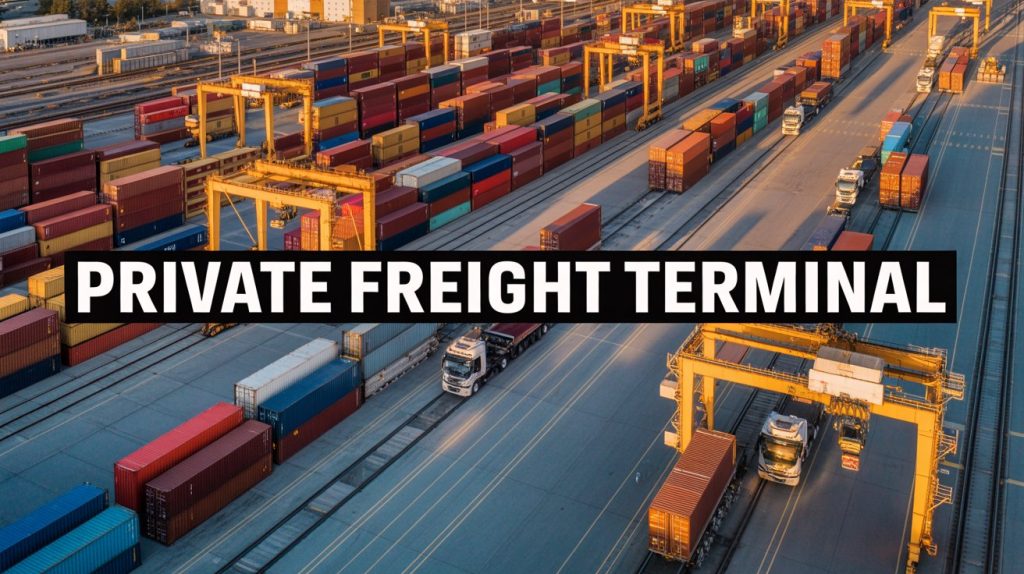
In the rapidly expanding global logistics industry, efficient cargo handling and transportation infrastructure play a vital role in keeping supply chains moving smoothly. One important component of modern logistics systems is the private freight terminal. These specialized facilities are designed to manage cargo transportation, storage, and distribution for businesses, industries, and logistics providers.
As global trade continues to grow, private freight terminals are becoming increasingly important for companies that want faster, more controlled, and more efficient shipping operations. In this article, we will explore what a private freight terminal is, how it works, its benefits, and why many businesses rely on these facilities to improve their logistics operations.
What Is a Private Freight Terminal?
A private freight terminal is a dedicated logistics facility owned or operated by a private company rather than a government or public authority. These terminals are used to manage the movement, storage, and handling of goods that are transported by trucks, trains, ships, or sometimes aircraft.
Unlike public freight terminals that are shared by multiple companies, private freight terminals are typically used by a specific company or a limited group of partners. This allows businesses to maintain greater control over their cargo operations, scheduling, and security.
Private freight terminals may include features such as:
- Cargo loading and unloading docks
- Warehousing and storage areas
- Container handling equipment
- Rail or truck access points
- Advanced logistics technology systems
These facilities are often located near major transportation routes such as highways, railways, seaports, or airports.
How a Private Freight Terminal Works
Private freight terminals function as central hubs where cargo is received, processed, and forwarded to its final destination. The process usually follows several steps.
Cargo Arrival
Goods arrive at the terminal via trucks, railcars, ships, or other transport methods. The cargo is checked and recorded when it enters the facility.
Unloading and Handling
Specialized equipment such as cranes, forklifts, and conveyor systems are used to unload cargo safely and efficiently.
Storage and Inventory Management
If cargo is not immediately transported to its next destination, it is stored in warehouses within the terminal. Modern inventory systems help track goods in real time.
Sorting and Distribution
The cargo is sorted according to destination, type, or shipping schedule. Logistics teams coordinate the next stage of transportation.
Key Features of a Private Freight Terminal
Some of the most important features include:
Advanced Cargo Handling Equipment
Modern terminals use cranes, forklifts, automated guided vehicles, and conveyor systems to move cargo quickly and safely.
Secure Storage Facilities
Private terminals often include secure warehouses to protect valuable or sensitive goods from damage, theft, or environmental conditions.
Technology and Automation
Digital tracking systems, barcode scanners, and logistics software allow companies to monitor shipments in real time.
Transportation Connectivity
Most terminals are located near major transportation networks, making it easy to move goods across regions or countries.
Benefits of Private Freight Terminals
Many businesses invest in private freight terminals because they offer several advantages compared to shared logistics facilities.
Greater Operational Control
Companies have full control over scheduling, cargo handling procedures, and facility management.
Improved Security
Restricted access and advanced monitoring systems help protect valuable shipments.
Efficient Supply Chain Management
By managing logistics operations internally, companies can streamline their supply chains and reduce transportation costs.
Industries That Use Private Freight Terminals
Private freight terminals serve a wide range of industries that require efficient cargo transportation and distribution.
Manufacturing
Factories rely on freight terminals to receive raw materials and ship finished products.
Retail and E-Commerce
Retail companies use logistics hubs to distribute goods to stores and customers quickly.
Agriculture
Farmers and agricultural exporters use freight terminals to transport crops and food products.
Energy and Natural Resources
Oil, gas, mining, and energy companies often operate specialized freight terminals for bulk cargo.
Automotive Industry
Automotive manufacturers use freight terminals to transport vehicle parts and finished vehicles.
Technology Transforming Freight Terminals
Modern logistics facilities are rapidly adopting new technologies to improve efficiency and reduce costs.
Automation
Automated cranes and robotic systems can handle cargo faster and more accurately than manual operations.
Artificial Intelligence
AI systems help optimize cargo routing, inventory management, and logistics planning.
Internet of Things (IoT)
IoT sensors allow companies to monitor cargo conditions such as temperature, humidity, and location.
Digital Logistics Platforms
Integrated software systems connect freight terminals with transportation networks, suppliers, and customers.
Challenges in Operating Private Freight Terminals
While private freight terminals offer many advantages, they also come with challenges.
High Initial Investment
Building a private terminal requires significant capital for land, infrastructure, and equipment.
Regulatory Compliance
Logistics facilities must comply with safety, environmental, and transportation regulations.
Operational Complexity
Managing cargo, transportation schedules, and inventory systems requires skilled logistics professionals.
The Future of Private Freight Terminals
Companies are increasingly investing in advanced technologies and infrastructure to create faster and more efficient supply chains.
Future developments may include:
- Fully automated cargo handling systems
- Smart logistics hubs powered by AI
- Sustainable energy solutions for terminal operations
- Integration with global digital supply chain platforms
These innovations will help improve transportation efficiency and reduce operational costs.
Conclusion
A private freight terminal is an essential component of modern logistics systems. By providing dedicated infrastructure for cargo handling, storage, and distribution, these facilities allow companies to maintain greater control over their supply chains.
With advantages such as faster processing, improved security, and customized logistics solutions, private freight terminals are becoming increasingly important for businesses operating in global trade and transportation industries.
As technology continues to transform logistics operations, private freight terminals will remain key hubs that connect production, transportation, and distribution networks around the world.